


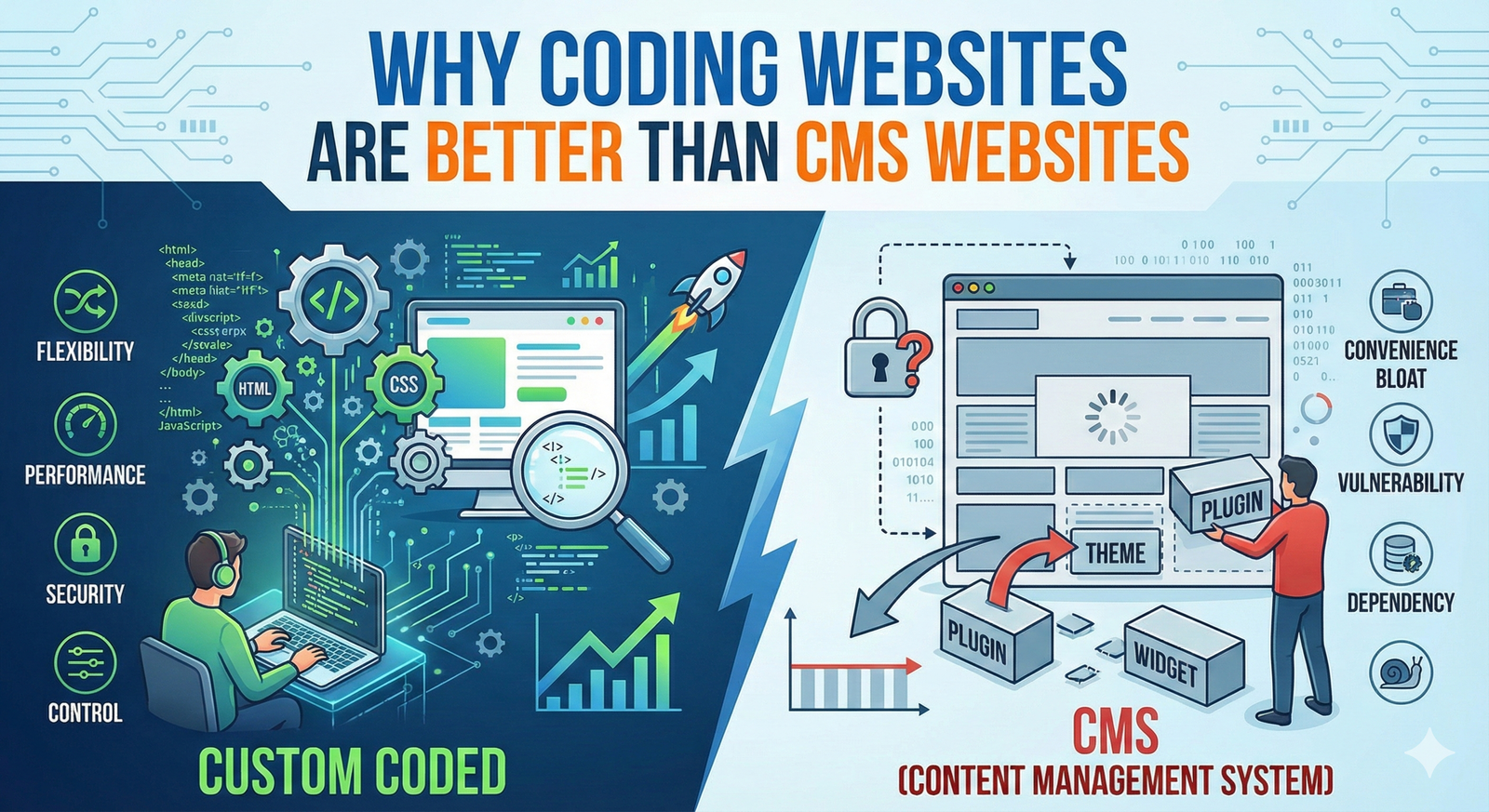
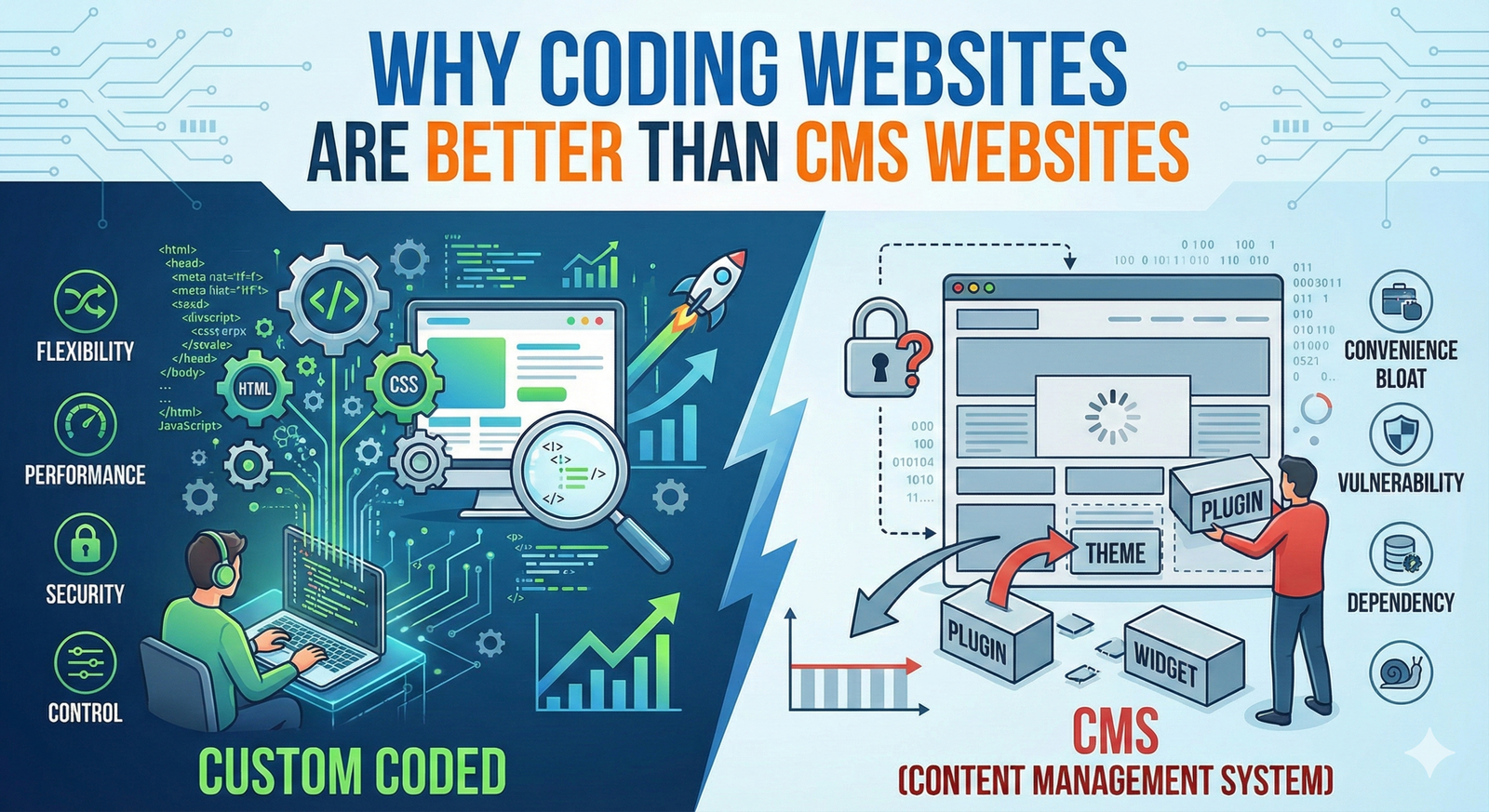
In today's digital-first world, each and every business needs to have a strong online presence. When it comes to building a website, the two popular options are custom-coded websites and CMS-based websites, such as WordPress, Wix, or Shopify. While these CMS platforms are convenient and allow for quick setup, many businesses are migrating to fully coded websites because of the long-term benefits. If you want full control, top-tier performance, and the highest level of security, a coded website often outclasses the CMS website in almost every aspect.
1. Superior Performance & Faster Loading Speed
Speed is one of the most important ranking factors for SEO and user experience. Custom-coded sites are built from scratch using only the features you need. This means:
No unnecessary plugins
No bloated code
Optimized scripts and styles
While CMS has become dependent on third-party themes and plugins that eventually slow down the performance of the site, a coded website would load faster, respond quicker, and provide a smoother experience to your visitors.
2. Full Customization and Complete Control
In CMS platforms, themes and plugin ecosystems are the only limits to your design and functionality. Even premium themes put a restriction on being creative.
However, with a custom-coded website, you get:
100% freedom to design any layout
Unlimited features based on business needs
Ability to scale or modify anytime
Be it a complex booking system, unique animations, or custom dashboards, coding lets you build just what you envision.
3. Better Security & Lower Risk of Hacks
The most prevalent kind of hacked websites are CMS sites because:
They rely on third-party plugins
Many themes don't get frequent updates
Attackers target known CMS vulnerabilities
Naturally, custom-coded websites are far more secure because the code is unique, making it harder to find exploits. Security protocols are built around your website, thus offering it a strong defense against malware and attacks.
4. Better SEO capabilities
With custom-website development, developers can implement SEO best practices without relying on plugins. You can:
Write clean, lightweight code
Optimize schema markup
Implement custom URL structures
Improve efficiency in crawling and indexing
The problem with CMS sites is that they usually have superfluous code, which slows down indexing and therefore affects ranking. When it comes to longer-term SEO performance, coded websites are more desirable.
5. Scalability for Business Growth
As your business grows, your website should grow with it. A CMS website can start to become unstable or slow whenever you:
Add too many plugins
Install heavy themes
Extend functionality
In contrast, custom-coded websites are designed to scale: in other words, features can be upgraded, performance enhanced, and web architecture expanded at will with no implications on speed or stability.
6. Unique Branding & Better User Experience
With CMS themes, many websites tend to look similar. If you want to outshine your competitors, a custom-coded website provides an instantly differentiating characteristic for your brand. It allows:
Tailor-made animations
Custom user journeys
Personalised visual elements
Highly interactive interface designs
A better user experience translates into higher conversions, more engagement, and improved customer trust.
7. No plugin dependencies They are helpful, yet they do bring along complications such as incompatibility issues, slowdowns in performance, and even security vulnerabilities. A coded website reduces its dependency on plugins because it integrates most of the features within the system. This will definitely result in better stability and long-term performance.



























Leave a comments: